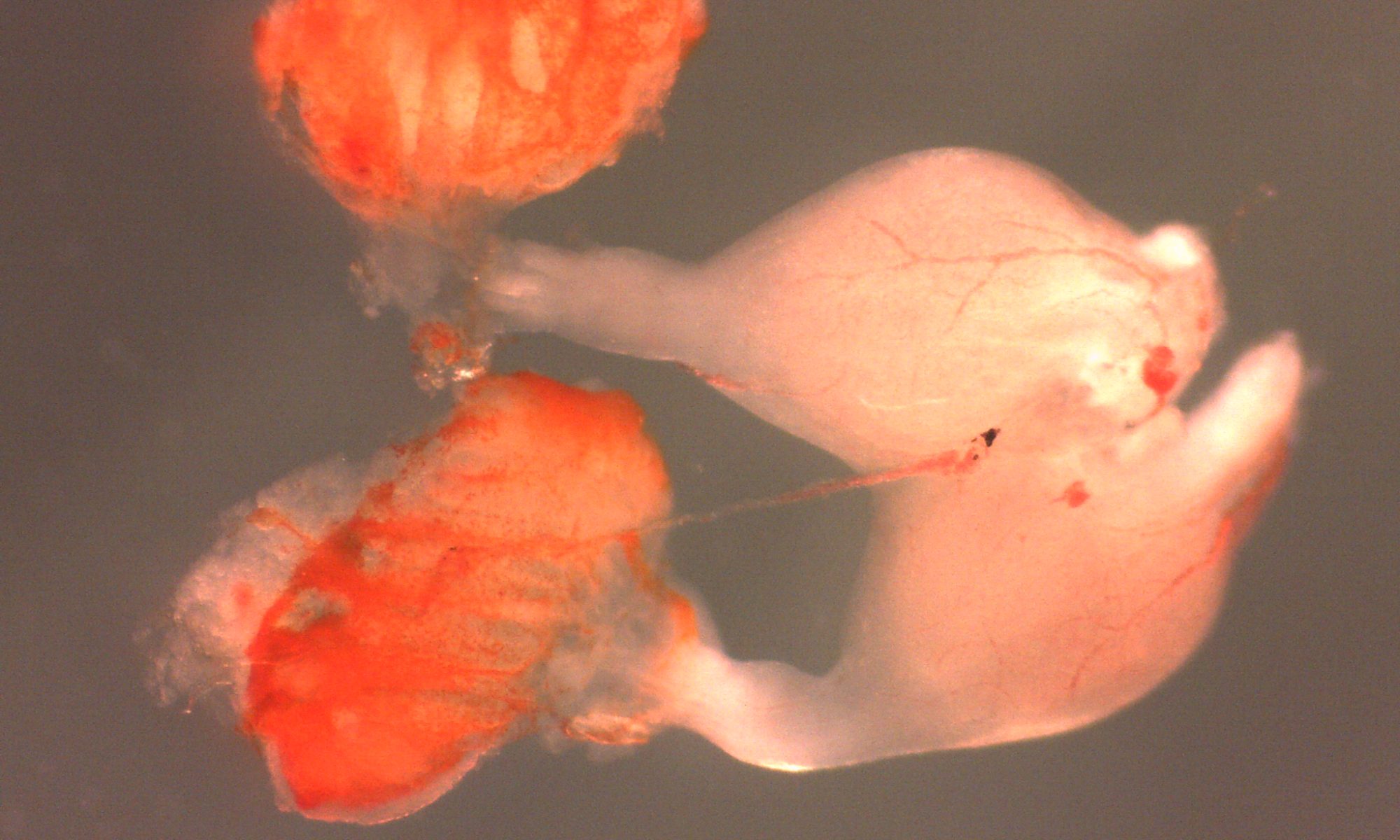


卒業生の鈴木偉久くんの博士論文の一部である,以下の論文が公開されています。
The following paper, which is a part of the doctoral dissertation of my former graduate student, Dr. Takehisa Suzuki, is now available on-line.
Suzuki, T., Nakahigashi, R., Adachi, M., Nishikawa, T., & Abe, H. (2024) The odor of a nontoxic tetrodotoxin analog, 5,6,11-trideoxytetrodotoxin, is detected by specific olfactory sensory neurons of the green spotted puffers. Chem. Senses 49: bjae021. DOI: 10.1093/chemse/bjae021. (オープンアクセスですのでどなたでもご覧いただけます)
この論文では東南アジアの汽水域に生息する有毒フグのひとつ,ミドリフグ成魚の嗅細胞に細胞内のCa2+濃度変化に応じて蛍光強度が変化する蛍光タンパク質,GCaMP6sを発現させることで、嗅細胞がどのような匂い物質を感知することができるのかCa2+イメージングによって調べました。その結果、クリプト型嗅細胞と呼ばれる嗅細胞の一種がフグ毒テトロドトキシン(tetrodotoxin; TTX)の類縁体のひとつである 5,6,11-trideoxyTTX (TDT)を特異的に感知することを明らかにしました。以下にこの論文の概要を背景も含めて紹介したいと思います。
In this paper, we investigated the ability of olfactory sensory neurons to detect odorants by expressing GCaMP6s, a fluorescent protein whose fluorescence intensity changes in response to changes in intracellular Ca2+ concentration, in adult green pufferfish, a toxic species of pufferfish living in the brackish waters of Southeast Asia, using Ca2+ imaging. We found that crypt-type olfactory sensory neurons specifically detect 5,6,11-trideoxyTTX (TDT), a nontoxic tetrodotoxin (TTX) analog. Below is a summary of this paper, including some background information.
TTXは有毒フグにおいてフェロモン様の誘引作用を示すと長らく考えられてきました。
TTX has long been considered a pheromone-like attractant in toxic pufferfish.

ところが、私達のこれまでの研究によって、有毒フグはTTXそのものではなく、TTX同様に有毒フグ体内に蓄積されている無毒なTTX類縁体であるTDTを匂いとして感知・誘引される事が明らかとなりました(Noguchi et al. 2022; クサフグ、Suzuki et al. 2022;ミドリフグ)。
However, our previous studies have revealed that toxic pufferfish are attracted to TDT, a non-toxic analog of TTX that accumulates in the body of toxic pufferfish, not TTX itself (Noguchi et al. 2022; grass puffer, Suzuki et al. 2022; green spotted puffer).


ここまでの研究では、有毒フグの鼻がTDTの「匂い」を感知することができることまではわかっていましたが、「生きているフグの鼻に存在する、どの細胞が実際にTDTを感知することができるのか?」がわかりませんでした。魚類の鼻には、微絨毛型・繊毛型・クリプト型と呼ばれる形態的に区別することができる3種類の嗅細胞が存在しており、これらの中にTDT分子を特異的に検出することができる嗅細胞がいることが予測されました。
So far, our research has shown that the nose of the toxic puffers can detect the “smell” of TDT, but we did not know “which cells in the nose of a live puffer fish can actually detect TDT?” In the nose of fish, there are three morphologically distinct types of olfactory sensory neurons called microvilli, cilia, and crypt cells, and we predicted that some of these cells can specifically detect the TDT.

個々の嗅細胞が、どのような匂い物質に対して応答するのかを調べるためには、一個一個の細胞を識別したうえで、そこにガラスの針を刺して匂い物質をかけたときの電気的興奮を調べたり、電気的興奮によって生じた細胞内のCa2+濃度の変化を、Ca2+濃度変化によって蛍光の強さが変化する試薬を使って高感度カメラを使って調べる方法があります。わたしたちも最初はミドリフグの嗅細胞にガラス電極を刺したり、ミドリフグの嗅上皮全体をCa2+濃度変化を調べるための蛍光色素で染めて記録を行おうとしたのですが、電極がうまく刺さらなかったり、すべての細胞が蛍光色素で染まってしまって、個々の細胞を識別できないなどの困難にぶち当たりました。
In order to examine what kind of odorant an individual olfactory sensory neuron responds to, we need to identify individual cells and examine the electrical activity when an odorant is applied, or examine the change in intracellular Ca2+ concentration caused by the electrical excitation using fluorescent Ca2+ indicators. Initially, we also tried to record by inserting glass electrodes into the olfactory sensory neurons or staining the entire olfactory epithelium with a fluorescent Ca2+-indicator dye. However, we encountered difficulties, such as the electrodes not inserting properly and all cells staining with the fluorescent dye, making it impossible to identify individual cells.
個々の感覚細胞や神経細胞の活動を調べるためには、特定タイプの細胞だけでCa2+濃度変化によって蛍光強度が変化する蛍光タンパク質を作り出す遺伝子組み換え動物(本来持っていない遺伝子を持つように作り変えた動物)を作成する方法もあるのですが、遺伝子組換え動物を作成するためにはミドリフグを実験室で複数世代人口繁殖しなくてはならず、それも困難でした。
To study the activity of individual sensory cells and neurons, we can also create genetically modified animals that produce genetically encoded Ca2+-indicator only in specific types of cells. However, to create genetically modified animals, multiple generations of green spotted puffers must be bred in the laboratory, which has also been difficult.
ところが私達はミドリフグの鼻が、本来、持っていない遺伝子を鼻の細胞に導入するのに便利な構造をしていることに気づきました。というのも多くの魚の鼻は体表に空いた鼻孔の内側に嗅細胞が密集する嗅上皮が存在するのですが、

ミドリフグの鼻は嗅上皮が体表に露出しています。そこでわたしたちはミドリフグの鼻に電気ショックをかけて一時的に細胞膜を破ることで、Ca2+濃度によって蛍光強度が変化する緑色蛍光タンパク質(GFP)の一種であるGCaMP6sを作るためのDNAを導入する、エレクトロポレーション法を試してみました。
However, we found that the nose of the green spotted puffer has a convenient structure for introducing exogenous genes into the cells. The nose of most fish has an olfactory epithelium, a dense concentration of olfactory sensory neurons, inside the nostrils on the body surface, but the nose of the green spotted puffer has the olfactory epithelium exposed on the body surface. Therefore, we tried an electroporation method to introduce GCaMP6s, a kind of genetically encoded Ca2+ indicator.
その結果、ミドリフグの嗅上皮に存在する嗅細胞で、まばらにGCaMP6s遺伝子を発現させることに成功しました。エレクトロポレーション法は元々、あまりDNAを導入する効率が良い方法ではないのですが、その効率の悪さによって個々の嗅細胞を識別できる、「塩梅のよい」遺伝子発現状態を作り出すことができました。
As a result, we succeeded in sparsely expressing the GCaMP6s gene in olfactory sensory neurons in the olfactory epithelium. Electroporation is not a very efficient method of introducing DNA, but it was able to create a “salubrious” state of gene expression in which individual olfactory sensory neurons could be distinguished by their inefficiency.

その結果、ミドリフグ嗅上皮の表層に存在する卵型の細胞、クリプト型嗅細胞はTTXや魚にとって餌の匂いであるアミノ酸には応答せず、TDTを特異的に感知していることがわかりました。
The results showed that crypt-type olfactory sensory neurons, oval cells in the superficial layer of the olfactory epithelium, do not respond to TTX or amino acids, which are food odors for fish, but specifically detect TDT.
ミドリフグや他の有毒フグにとって、「TDTの匂いを嗅げる」ということに如何なる意味があるのでしょうか?私達は2つの役割があるのではないかと考えています。
What does “being able to smell TDT” mean to green spotted puffer and other toxic pufferfish? We think it may have two roles.
1つ目は、TTXを含む餌生物を探す手がかりにしているのではないかというものです。というのもヒラムシや肉食性貝類などTTXを体内に保有する生物はTTXと同時にTDTを多く持っています。このTDTの匂いを嗅ぐことで、TTXを含んだ餌を捕食・体内にTTXを溜め込むための手がかりとしていると考えられます。
The first is that they may use it as a clue to find TTX-containing prey. By smelling TDT, they may use it as a clue to prey on TTX-containing prey and accumulate TTX in their bodies.
もう一つは異性を探す手がかりにしているというものです。TDTはTTXと同様、繁殖期のメスの卵巣に蓄積されます。この卵巣から排泄腔を経由して漏れ出たTDTの匂いをオスが嗅ぎつけることで産卵・放精のタイミングを合わせる手がかりにしているのかもしれません。そして卵にはTDTとともに大量のTTXも含まれています。フグ以外の多くの魚にとってTTXは苦みとして忌避性の味として感知されます。これによって有毒フグは卵から捕食者を守っているようです。
Another is that TDT, like TTX, accumulates in the ovaries of females during the breeding season. The male may smell the TDT leaking from the ovary through the excretory cavity and use this as a clue to timing the spawning and release of eggs.
The eggs also contain a large amount of TTX along with TDT. For many fish other than pufferfish, TTX is perceived as a bitter, repellent taste. This appears to allow the toxic pufferfish to protect predators from the eggs.
